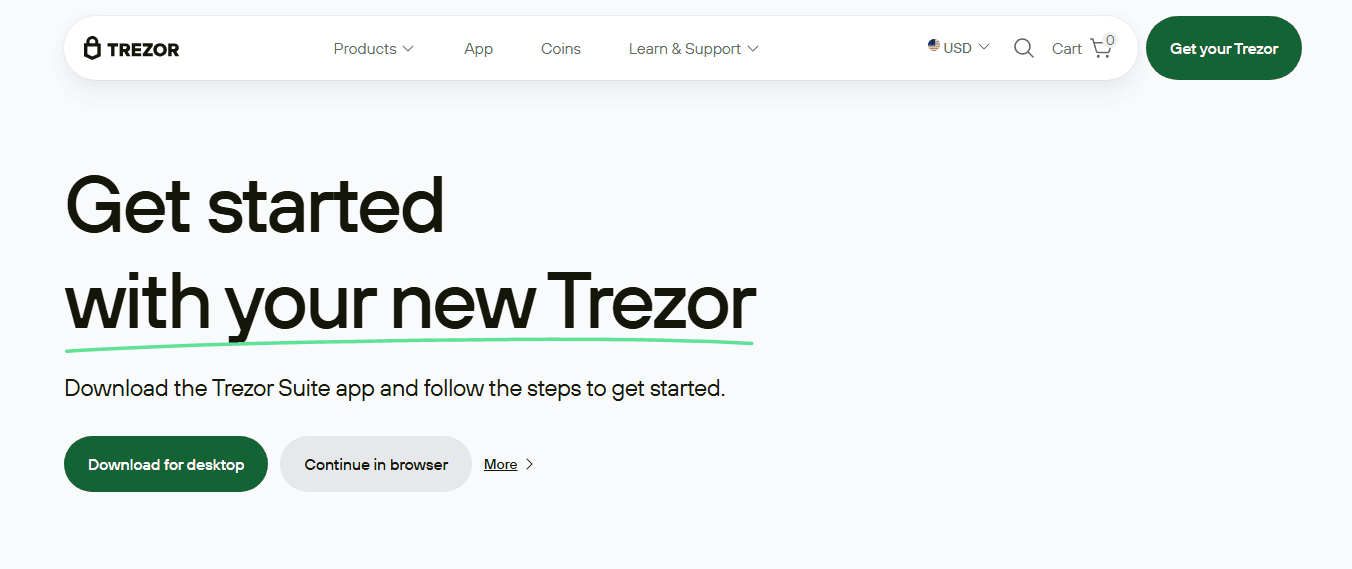
Trezor.io/start: A Complete Guide to Setting Up and Protecting Your Crypto Wallet
As cryptocurrency becomes more mainstream, one truth remains unchanged: you are your own bank. Unlike traditional finance, there is no password reset button or customer support team that can recover lost crypto. This makes security not just important—but essential.
Trezor, a pioneer in hardware wallet technology, provides one of the safest ways to store cryptocurrency. The official onboarding page, Trezor.io/start, exists to help users correctly and securely set up their hardware wallet from the very beginning.
This guide explains the entire process—from opening the box to long-term protection—so you can confidently take control of your digital assets.
What Is Trezor.io/start?
Trezor.io/start is the official setup gateway for all Trezor hardware wallets. It ensures users follow a secure, verified process when:
Installing official Trezor software
Connecting and verifying the device
Creating or restoring a crypto wallet
Securing access with PINs and recovery seeds
Using this page minimizes risks from fake software, phishing links, or unsafe setup practices.
Why Self-Custody Matters in Crypto
Keeping crypto on exchanges means trusting third parties with your funds. History has shown that exchanges can be hacked, frozen, or shut down. Hardware wallets solve this by giving you full ownership of your private keys.
What Makes Trezor a Strong Choice?
Private keys stay offline at all times
Transactions require physical confirmation
Backup recovery ensures asset recovery
Optional passphrase adds advanced protection
Open-source code increases transparency
Supports thousands of cryptocurrencies
Trezor balances strong security with usability, making it suitable for beginners and professionals alike.
What You Need Before Starting
Before visiting Trezor.io/start, make sure you have:
A new or factory-reset Trezor device
A personal computer you trust
A secure internet connection
Pen and paper (for writing recovery words)
Never begin setup on a public or shared computer.
Step 1: Access Trezor.io/start Safely
Open your web browser and go to Trezor.io/start.
The website automatically:
Detects your operating system
Identifies your Trezor model
Guides you to the correct software
Always double-check the web address to avoid phishing websites pretending to be Trezor.
Step 2: Install Official Trezor Software
You will be guided to install one of the following:
Trezor Suite (Recommended)
A desktop application that allows you to:
Manage crypto accounts
Send and receive funds
View transaction history
Update device firmware
Track portfolio value
Trezor Bridge
A background service that allows browser-based communication with the device.
For most users, Trezor Suite offers better security and usability.
Step 3: Connect and Authenticate Your Device
Once the software is installed:
Connect your Trezor device via USB
The software will detect the device
You may be prompted to install or update firmware
Firmware updates must be confirmed directly on the device screen, ensuring authenticity and protection against tampering.
Step 4: Choose Wallet Setup Type
You’ll now choose one of two options:
Create a New Wallet
Select this if:
You are using a brand-new device
You do not have a recovery seed
Recover an Existing Wallet
Select this if:
You already have a recovery seed
You are restoring access to existing funds
Recovery only works with the correct seed phrase.
Step 5: Create a Secure PIN
The PIN protects your device if it is lost or stolen.
PIN entry uses a scrambled keypad
Numbers change position each time
Prevents keylogging and screen capture attacks
Choose a PIN that is hard to guess but easy for you to remember.
Step 6: Back Up Your Recovery Seed
This is the most critical step in the entire process.
The device generates a 12- or 24-word recovery seed
Words appear only once
They must be written down manually
Recovery Seed Rules:
Never store digitally
Never take photos
Never share with anyone
Store offline in a secure place
Anyone with your recovery seed can fully access your crypto.
Optional Step: Enable Passphrase Protection
For advanced security, Trezor allows passphrases.
Benefits of a Passphrase:
Creates hidden wallets
Protects funds even if seed is exposed
Allows multiple wallets from one seed
⚠️ Passphrases are not recoverable. If forgotten, funds in that wallet are lost permanently.
Everyday Use with Trezor Suite
Once setup is complete, Trezor Suite becomes your dashboard.
You can:
Add new crypto accounts
Monitor balances
Send and receive funds
Manage tokens
Track portfolio performance
All sensitive actions require physical confirmation on the Trezor device.
Sending Crypto Securely
To send cryptocurrency:
Open Trezor Suite
Choose the account
Enter recipient address and amount
Verify details on the device screen
Confirm physically
This ensures malware cannot alter transaction details.
Receiving Crypto Safely
To receive crypto:
Select an account
Click “Receive”
Verify the address on the device
Share the verified address
Always trust the address shown on the device—not just on the computer screen.
Built-In Security Layers
Trezor protects your funds using:
Offline key storage
PIN authentication
Recovery seed backup
Optional passphrase wallets
On-device transaction verification
Open-source firmware
These layers protect against digital and physical attacks.
Common Issues and Solutions
Device Not Detected
Try a different USB cable
Restart Trezor Suite
Switch USB ports
Forgotten PIN
Reset the device
Restore wallet using recovery seed
Firmware Problems
Restart device
Reinstall via official software
Lost Recovery Seed
Wallet cannot be recovered
Always maintain secure backups
Best Practices for Long-Term Safety
Store recovery seed offline
Use passphrase for large balances
Keep firmware updated
Avoid browser wallet extensions
Ignore unsolicited emails or messages
Always verify transactions on-device
Security is an ongoing process, not a one-time task.
If Your Trezor Is Lost or Stolen
Your crypto remains safe if:
Your PIN is strong
Your recovery seed is secure
To restore access:
Purchase a new Trezor device
Select “Recover wallet”
Enter recovery seed
Enter passphrase if used
Your funds will reappear automatically.
Who Should Use Trezor.io/start?
Crypto beginners seeking safety
Long-term investors
NFT collectors
High-value holders
Anyone leaving centralized exchanges
Trezor is designed for people who value true ownership.